03. Seoul Lotus Lantern Festival — A 1,200-Year-Old UNESCO Light Festival in the Heart of Seoul
Quick Info
- Cost: All events free; lantern-making workshop ~$3–10
- From Incheon Airport: ~1.5 hr (1 transfer: AREX → Subway Line 1/3)
- Time Needed: Half day (arrive afternoon, stay through parade night)
- Crowds: High — tens of thousands along Jongno Street
- English: Signs available — Jogyesa has English guides; some festival volunteers
- Annual: Yes — held every May (week before Buddha's Birthday)
- Best For: Solo travelers, Photographers, Culture lovers
In One Line
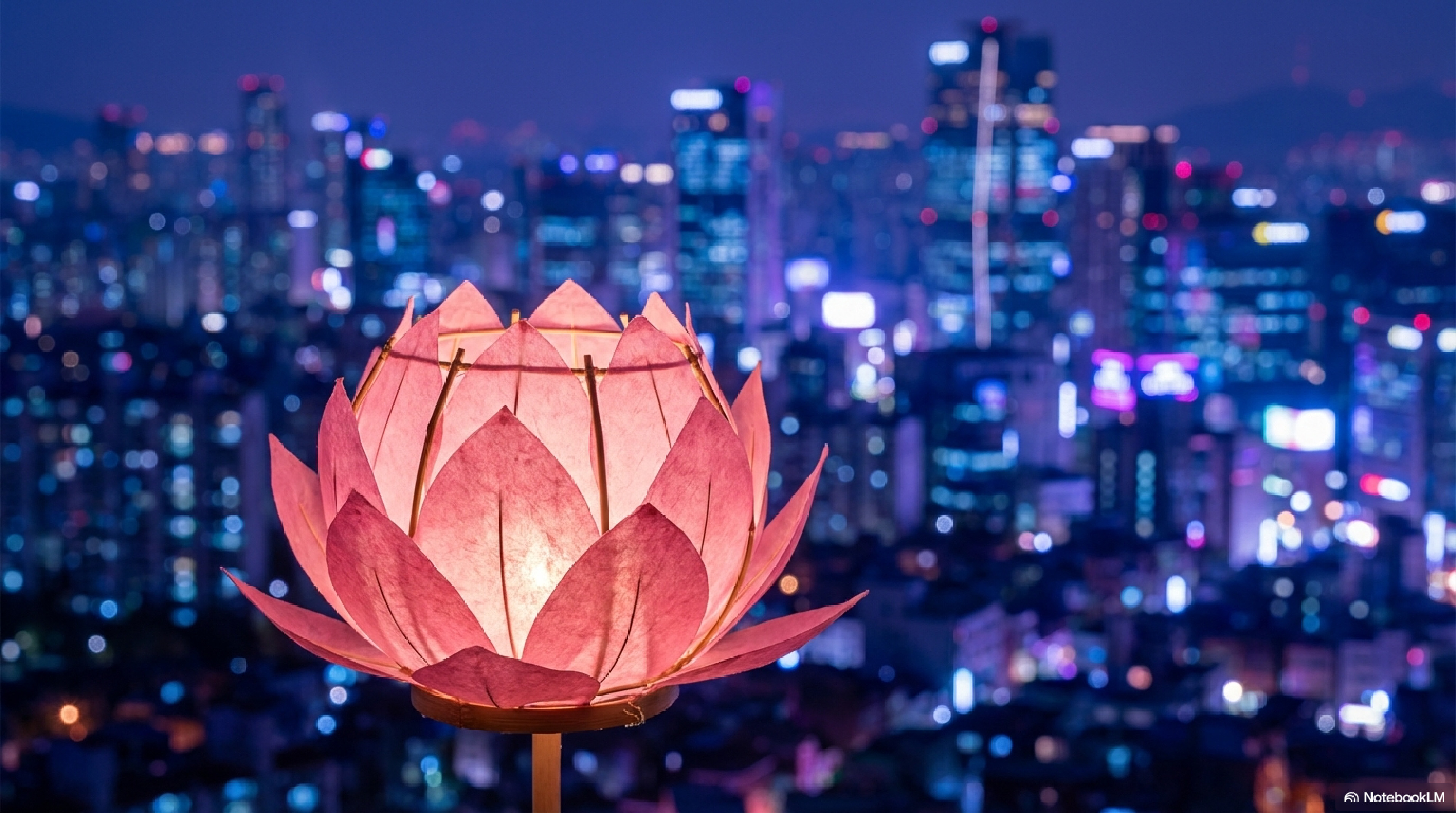
A UNESCO-listed festival where tens of thousands of lotus lanterns light up Seoul's historic Jongno Street. This 1,200-year-old Buddhist tradition has become a vibrant city celebration open to everyone — and it's completely free.
Basic Info
- Festival: Yeondeunghoe (Lotus Lantern Festival, 연등회)
- Main Events: May 16 (Sat) – 17 (Sun), 2026
- Lantern Displays: Mid-April to mid-May (Cheonggyecheon, Gwanghwamun, Jogyesa)
- Buddhist Birthday Ceremony: May 24 (Sun), 2026
- Location: Jongno area (Dongdaemun → Jogyesa Temple), central Seoul
- Admission: All events free (lantern-making: ₩5,000–15,000 materials / ~$3–10)
- Scale: 1,200-year tradition, one of Seoul's largest spring festivals
- UNESCO: Inscribed as Intangible Cultural Heritage of Humanity in 2020
- Researched: March 30, 2026 (Exchange rate: 1 USD ≈ 1,508 KRW)
Why This Festival?
1. UNESCO Intangible Cultural Heritage
Yeondeunghoe was inscribed on UNESCO's list in December 2020. Records date back to 866 AD (King Gyeongmun of Silla). It has survived over 1,200 years through dynasty changes and colonial rule — one of Korea's oldest continuously celebrated traditions. UNESCO recognized it for "transcending boundaries of nationality, ethnicity, religion, and disability."
2. A World-Class Free Festival in the Heart of Seoul
No admission fee. No special tickets. Just walk out of any subway station in central Seoul and you're at the festival. The Grand Lantern Parade alone fills Jongno Street with tens of thousands of glowing lanterns — a spectacle that rivals any light festival in the world.
3. A Celebration Beyond Religion
While rooted in Buddhist tradition, Yeondeunghoe has evolved into a citywide celebration. People of all backgrounds join in: making lanterns, watching the parade, and dancing together at the Daedong Hanmadang (communal celebration) afterward. It's a festival for everyone.
Main Programs
Saturday, May 16 — The Big Night
| Time | Program | Details |
|---|---|---|
| 4:30–6:00 PM | Eoulim Madang | Dongguk University Stadium — opening ceremony with Buddhist cheer rally and performances |
| 7:00–9:30 PM | Grand Lantern Parade | Heunginjimun (Dongdaemun) → Jongno → Jogyesa Temple — tens of thousands of lanterns in procession |
| 9:30–11:00 PM | Daedong Hanmadang | Jonggak area — communal celebration where everyone dances together |
Sunday, May 17
| Time | Program | Details |
|---|---|---|
| 11:00 AM–7:00 PM | Traditional Culture Fair | Streets near Jogyesa — lantern making + traditional craft workshops |
| 12:00–6:00 PM | Performance Stage | Traditional music, mask dance, samulnori (percussion) |
| 7:00–9:00 PM | Lantern Play | Wish lantern flying, nighttime lantern activities |
Lantern Displays (Mid-April to Mid-May)
- Cheonggyecheon Stream: Large decorative lanterns installed above the water — best night walk in Seoul during this season
- Gwanghwamun Square: Citizen wish lantern displays
- Jogyesa Temple: Thousands of colorful lanterns covering the entire temple grounds
- Bongeunsa Temple: Lantern displays in the Gangnam area
How to Get There
From Incheon Airport to Seoul
- AREX Express: Incheon Airport → Seoul Station, ~43 min, ₩9,500 (~$6)
- AREX All-Stop: ~58 min, ₩4,850 (~$3)
To the Festival (Subway)
The festival is in central Seoul — easily accessible from anywhere by subway.
- Parade Start: Line 1/4 Dongdaemun Station or Line 1 Dongdaemun History & Culture Park Station
- Parade Viewing (Jongno): Line 1 Jonggak Station, Line 3 Anguk Station, Line 5 Gwanghwamun Station
- Jogyesa Temple: Line 3 Anguk Station Exit 6, then 5-min walk
- Traditional Culture Fair: Line 1 Jonggak Station Exit 2, then 3-min walk
- Cheonggyecheon Lanterns: Line 1 Jonggak Station Exit 5, then 2-min walk
Total from Incheon Airport: ~1.5 hours, ~₩15,000 / ~$10 (one way)
Tip: Traffic is blocked on Jongno Street during the parade (May 16). Take the subway — Jonggak and Anguk stations are closest.
What to Eat
Insadong & Jongno Area
The festival is surrounded by some of Seoul's best traditional food streets, all within a 5-minute walk.
- Insadong hotteok: Traditional Korean pancakes filled with seeds and brown sugar. ₩2,000–3,000 (~$1.50–2)
- Samcheong-dong sujebi: Hand-torn flour dumpling soup — a beloved Korean comfort food. ₩8,000–10,000 (~$5–7)
- Nakwon-dong dakhanmari: Whole chicken soup — a Jongno classic. ~₩15,000/person (~$10)
- Gwangjang Market (1 subway stop away): Bindaetteok (mung bean pancakes), mayak gimbap (addictive mini rice rolls), yukhoe (raw beef). ₩5,000–15,000
Festival Food
- Traditional Culture Fair (May 17) has food stalls with tteok (rice cakes), jeon (savory pancakes), and yakgwa (honey cookies). ₩3,000–5,000
- Lotus-shaped desserts and lotus flower tea — festival specials
Balwoo Gongyang (Michelin 1-Star, at Jogyesa)
- Official Buddhist temple cuisine restaurant run by the Jogye Order
- Anguk Station Exit 6, 3-min walk (directly across from Jogyesa)
- Lunch ~₩30,000 (~$20), dinner ₩45,000–95,000 (~$30–63)
- Reservations required
Weather Note (May in Seoul)
- Daytime: 17–22°C (63–72°F) / Night: 10–14°C (50–57°F)
- Bring a jacket or cardigan — standing outdoors for hours gets cold
- Comfortable walking shoes essential
Nearby Attractions
Insadong (3-min walk)
- Traditional crafts, Korean paper (hanji), pottery, and art galleries
- Ssamzigil (multi-level cultural complex)
- Hanbok rental: ₩5,000–20,000 for 1-hour rental
Bukchon Hanok Village (10-min walk)
- 600-year-old neighborhood of traditional Korean houses (hanok)
- Walk the Gyedong-gil and Samcheong-dong-gil alleys + cafes
- Free (open streets)
Gyeongbokgung Palace (15-min walk / 1 subway stop)
- Joseon dynasty royal palace, guard-changing ceremony (11:00 AM, 1:00 PM)
- Admission: ₩3,000 (~$2), free if wearing hanbok
- Night openings are seasonal (spring/autumn only)
Cheonggyecheon Stream (2-min walk)
- 5.8 km restored urban stream in central Seoul
- During lantern display season: nighttime lantern walk along the stream
- Free
Gwangjang Market (10-min walk)
- Korea's oldest traditional market, street food paradise
- Bindaetteok, mayak gimbap, yukhoe, sundae (blood sausage)
- Open until late — perfect after the parade
Practical Info
- Restrooms: Public restrooms at Jogyesa Temple, Jonggak Station, and nearby convenience stores
- Convenience stores: CU, GS25, 7-Eleven everywhere in the Jongno/Insadong area
- Cash or card?: Most places accept cards. Some festival stalls may be cash only
- Rain policy: The Grand Lantern Parade runs rain or shine (rainy parades have their own beauty)
- Accommodation: Jongno/Insadong guesthouses ₩30,000–50,000 (~$20–33), hotels ₩100,000–200,000 (~$66–133)
- Language: Jogyesa has English signage and some English-speaking volunteers at the festival. Download Naver Map app for navigation
- Photo tips: Watch the parade from the sidewalks along Jongno Street. Near Jonggak intersection is the best spot for dense lantern shots. Bring a tripod and arrive early (by 5 PM) for the best position
- Recommended route: 4 PM Eoulim Madang at Dongguk Univ. → 6 PM grab a spot on Jongno → 7 PM watch the Grand Parade → 9:30 PM dance at Daedong Hanmadang → 10 PM night walk along Cheonggyecheon lanterns
The Bottom Line
Yeondeunghoe is Korea's oldest festival and a living cultural heritage recognized by UNESCO.
On the night when tens of thousands of lanterns light up Seoul's Jongno Street, you're standing under the same glow that people in the Silla dynasty stood under 1,200 years ago. That thought alone is extraordinary.
It's free, it's in the center of Seoul, and you can walk to it from any nearby subway station. There is no more accessible traditional Korean festival than this.
Detailed English guides for international visitors — with parade tips, food recommendations, and suggested routes — are still hard to find. That's why we wrote this.